AquaFarmer (Aquaculture) : Mobile App Case Study
If Aquafarmer can provide science-backed solutions for farmers to make decisions on seed, crop, feed, care etc, the app can become an indispensable superhero toolkit that engages the user and maybe even creates leads for the business.
-
UX Intern
Role -
7 weeks
Project Duration -
AquaCulture
Industry -
Research | Empathise | Ideate | Proto
Process
Research
- While feeling stumped by all the unfamiliar terms, researching the industry helped me grasp the nature of the industry, standard terminologies, and technologies specific to the field.
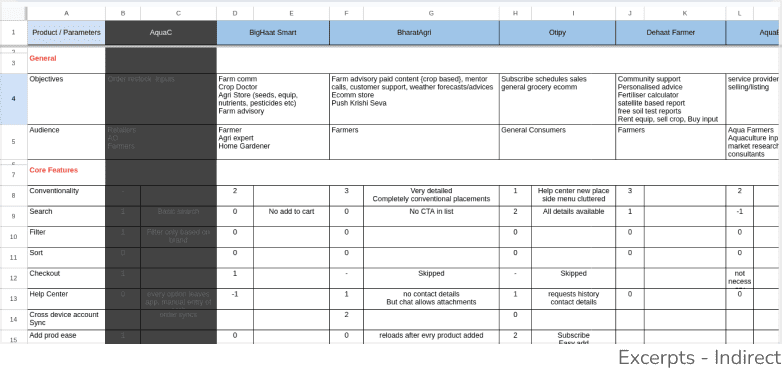
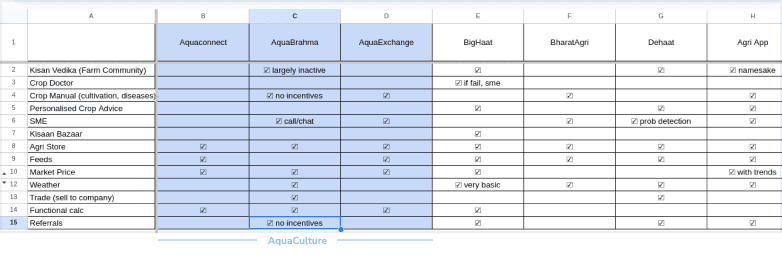
- Through competitive analysis, I figured out how competitors position their features to achieve the business’s goals. I also benchmarked the existing app to identify unexplored functionalities.
 Whiteboard exercise, blurred out

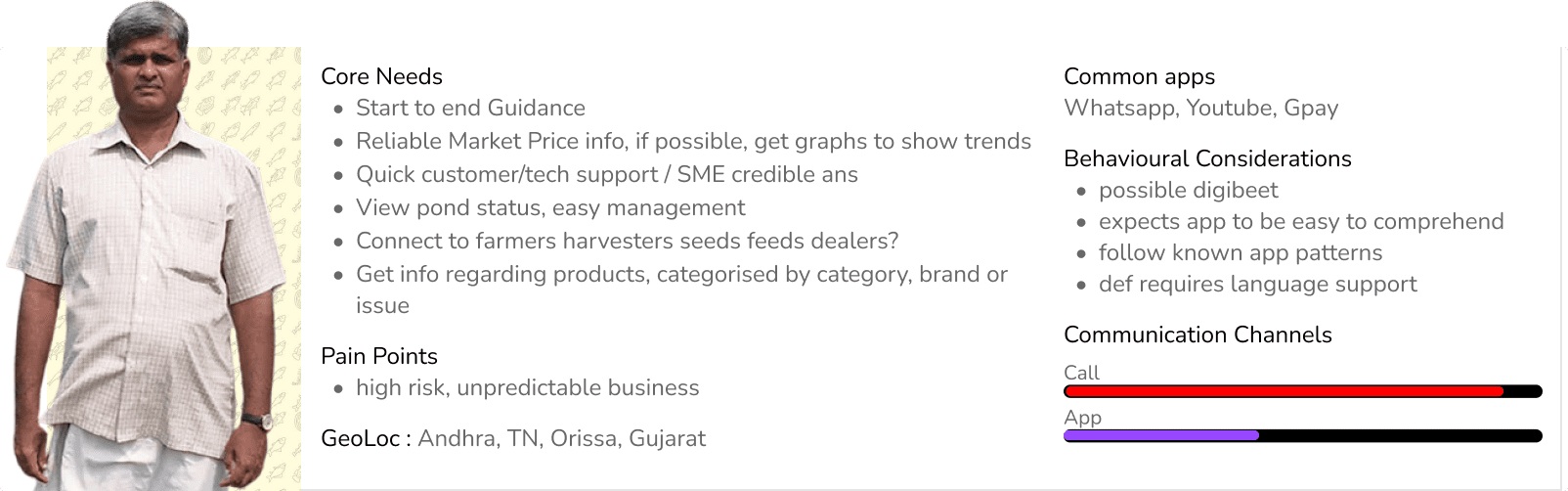
The AquaFarmers
I mainly carried this out to recognize unmet user needs and get insights into the user. The team could also cross-reference to them while making decisions.
“I lost my entire harvest overnight due to an infestation I couldn’t control”
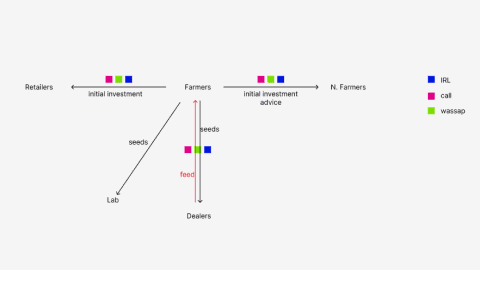
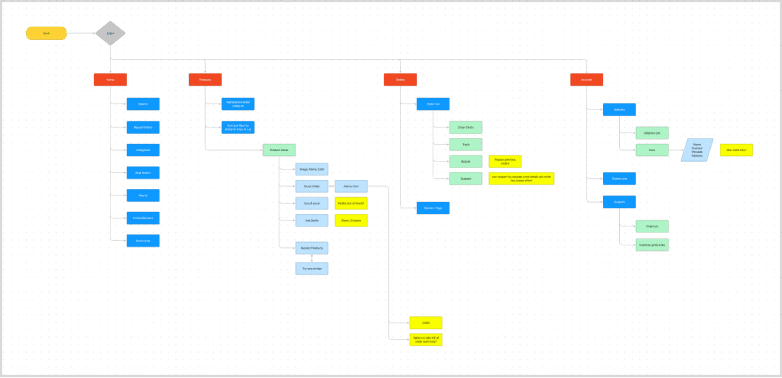
Est Loss : 25LBy mapping out each touchpoint and interdependencies in the real world, I tried to pinpoint areas where users may encounter difficulties or require assistance. This will also help the stakeholders in strategic decision making on resource allocation or spotting disconnects.
Ideation
What works
According to usage data, market price feature was the most important and had the highest value addition to users.
The next was using the app to enquire about products.
Pond management had the least usage out of all features, but had the most potential.
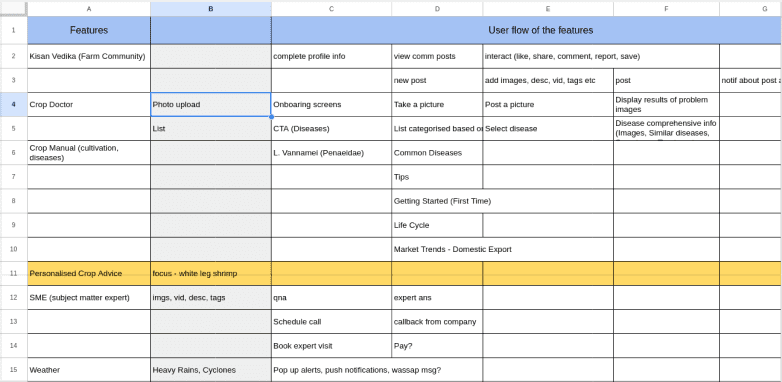
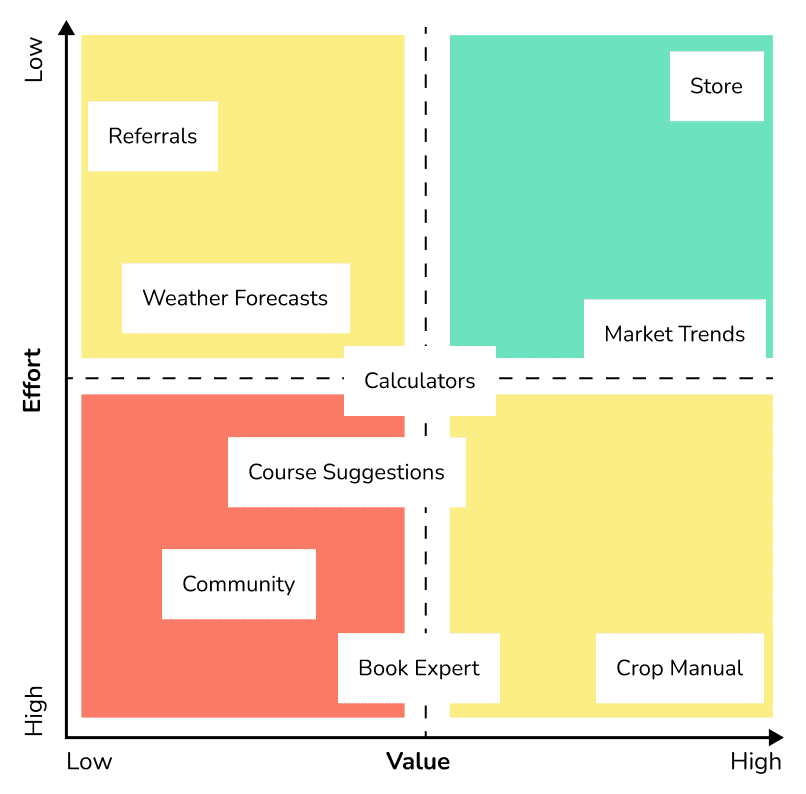
With all requirements noted down, I collaborated with (read incessantly disturbed) the product team, customer team and the tech team to rank features by their value and effort.
Prototypes
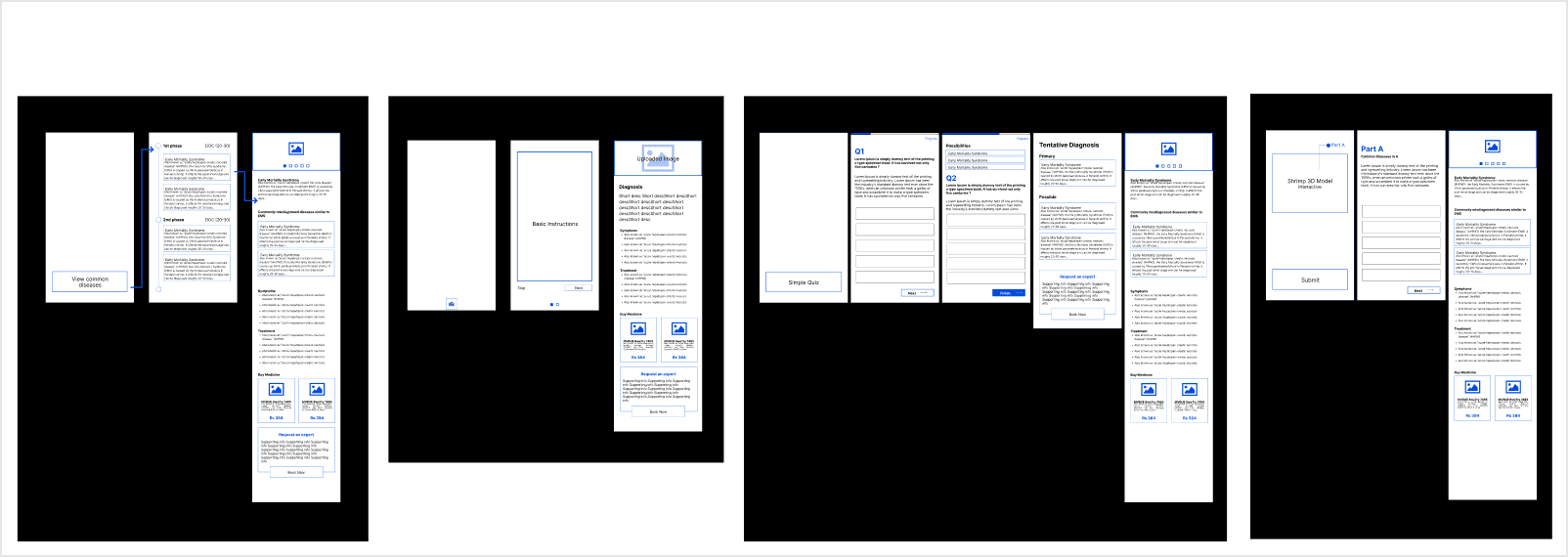
Examples of feature development process.
The initial conjecture was that it's easiest to add value from a touchpoint we were already providing. Through ground support and sales stores.
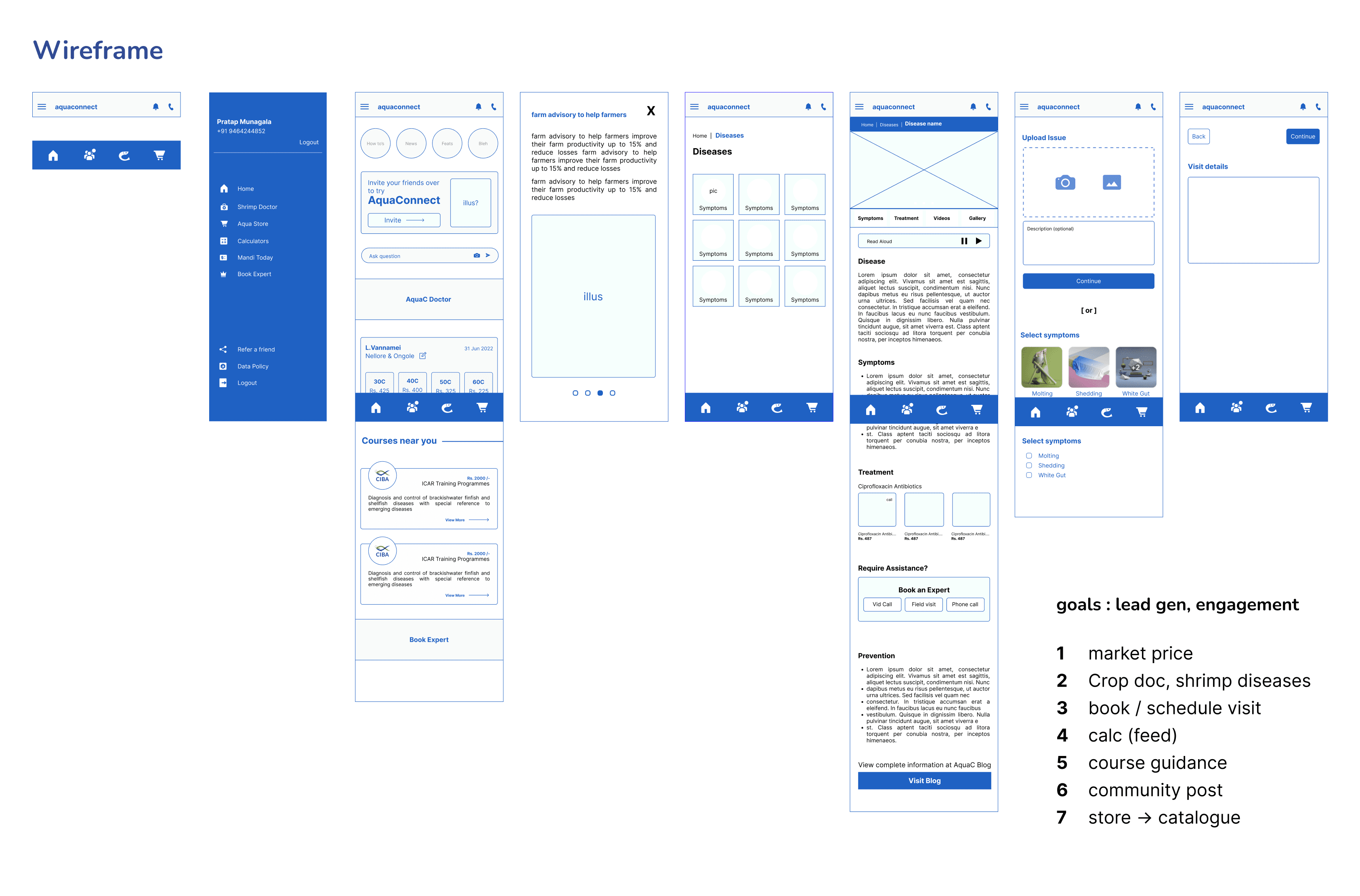
Feature fulfils both the initial business requirements.
To simply explain the feature, farmers can get an idea of the disease their shrimp may have. We can then show recommendations of medicines for the fatal situations and diy treatments or simple advice for the smaller issues.
Reflections
- This was my first project and it helped to have a supportive team to guide me when I felt stumped
- I'd been given a briefing about every product under AquaConnect's full-stack solution (Incubators-Farmers-Banks/Lenders-Harvesters-Exporters) and that gave me a huge lead into understanding the big-picture. Though my focus was purely on the Farmers and creating an app that would add value to them without any significant financial gain, knowing the inter-dependencies between apps helped me conceptualize the complex network.
- Effective collaboration and communication within the project team and with stakeholders proved to be vital. Regular team meetings, clear communication channels, and collaborative tools, meant less idle or rework time and the design remained aligned with the project objectives.